Speech Translator Technology of the Future
Imagine the day where you could travel to any country in the world, set down a small voice translator on a table, and have a conversation with people who speak any other language. That is the ultimate goal. It will likely take a long time to achieve, but most people in the industry believe the day will eventually come. How exciting will that be?
Though language translation software has already come a long way in the last ten to fifteen years, it has a very promising and exciting future in store for all of us. The ideal technology improvement is ultimately for handheld devices which can instantly translate from one spoken language into another. While this is still a pipedream for many reasons, it is definitely something to aim for in the near future.
The United States Government is working with a major software development company on technology to facilitate speech-to-speech translation for military and government usage. However, for the private sector the most likely advances to come in the shorter-term are in the software language translation engines and additional language availability. As PDAs and mobile phones hold more memory and processors become smaller and faster, the private sector will see more robust portable translation products in the near future.
The Voice Translator Challenge
People do not speak in the same way they write. Speech is full of idioms, slang, and words with multiple meanings. In addition, spoken language is not static. Spoken language is constantly changing new words and new word meanings are added into common speech. This makes technological translation challenging for even the best designed translation engines.
Today it is very possible to translate spoken words into text through the use of voice recognition software. This text file can then be translated through language translation software, essentially making speech to written translation possible. However, voice recognition software has not yet been perfected and still requires a lot of personalization and patience to work properly. Because the speech recognition text file is not ever 100% accurate, adding language translation on top of it adds to the error rate and further degrades the documents integrity.
Speech-to-Speech Translation
In order to have true speech-to-speech translation the technology needs to be developed which will allow for contextual understanding and contextual translations. In addition, understanding of the emotion and real meanings behind a speaker’s words can go a long way in clarifying a translation. Right now this is only achieved through human translation.
How it works
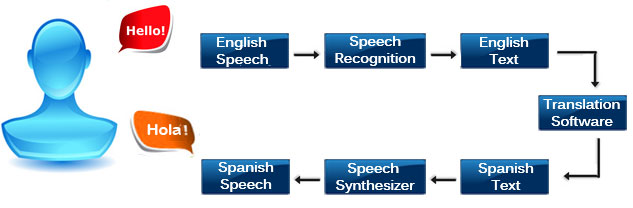
These would be the main steps for speech-to-speech translation:
- Speech to text - A person speaks into a microphone and the speech recognition software tool recognizes the spoken language and converts it to text..
- Text translation - Language translation software translates the text into the chosen foreign language.
- Text to speech - The translated text is finally sent to the speech synthesis module that converts the translated text into speech and then reads it back to you.
Although this might look simple, there are numerous errors that can occur, especially in the voice recognition part. For instance, depending on your accent and rate of speech, you can say "Where's the beef" and discover the tool has transcribed it as "Kirby". Also, the software can identify simple words and phrases, but it can have a difficult time when dealing with longer phrases. There are various applications on the market that can be used for speech translation, but due to the additional steps, there is more of a chance of errors in the final result. Speech recoginition software has improved over the years and we are now at a level of accuracy that can be extremely helpful in communicating. . Systran is constantly working hard to provide the highest accuracy available for foreign language translation.
What Software to Use to Get Speech to Text Translation Now
The good news is that you can combine a couple of software packages that are currently on the market to help you get speech to text translation now. By utilizing speech recognition software along with Systran translation software you can speak into your computer's microphone, the speech recognition software will type out the text automatically, then you can just click "translate" and Systran's software will instantly translate the text into the language of your choice. Finally, you can use a text to speech software to read the translated text back to you.
However, there's also another important thing to consider. In order to use speech translation software, you need to be connected to the Internet and if you're travelling to a foreign country, the costs can be very high, that is if you can find any Internet connection available at all. This is why Systran comes in very handy. Once you have the software installed on your computer, you can use it to translate text anytime and no matter where you are.
Although the speech-to-speech translation still has a long way to go, one thing we can reassure you - there's not better or more accurate translation software available like Systran. So, don't miss out, grab yours today!
Want to learn more about translation software technology? Visit our dedicated page or go through our line of professional translation software products.
SYSTRAN version 8.0 now includes a Speech Translator.