Home Translation Software Free Translation Buy Translation Software Customer Service Company Contact
 

spanish to english translation

French Language and Translation

  French translation is needed more than ever with the web. Did you know over 280 million people speak this language in the world? It is one of the most spoken languages in the world.

French is spoken in France, Canada, Belgium, Switzerland, Luxemburg, Monaco, and many other countries around the world. In Canada it is often referred to as " Canadian French", which is a dialect of this language. When translating you will need to learn more about Dialects.

The French language is a romance language, meaning that it is descended from Latin.

French to English translation: Translate English to French

French Translation Software

French Language converter Translates French to English translation and vice versa is easy with Systran software translators.

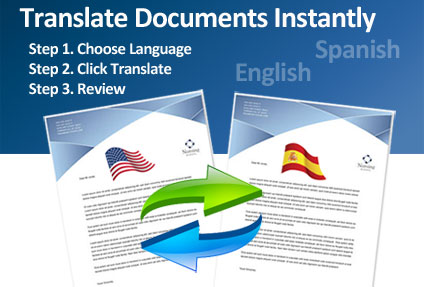
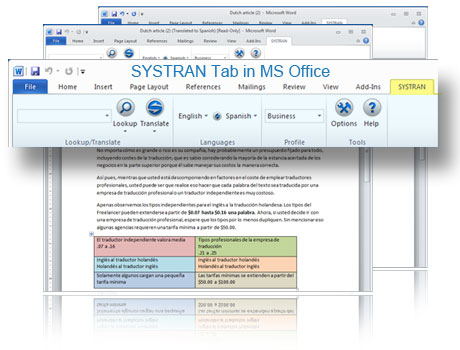
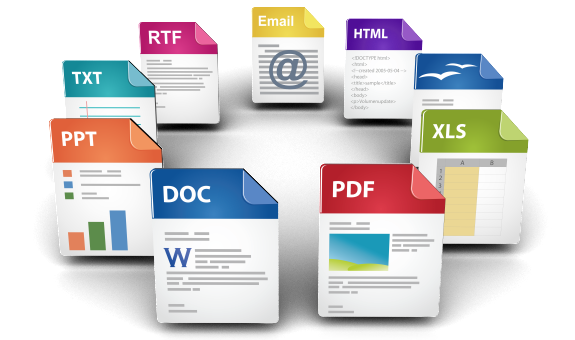
Translate sentences, phrases, full documents, email and more. Translating MS word documents is easy, translate Excel spreadsheets, Power Point, Word and even a built in French translator for Emails with Outlook.

This software is very easy to use and has many custom features that help to make the software even more accurate as you customize it for your specific translation needs. It is an easier and cost-effective alternative to hiring translation services for regular translations. However, in case of crucial documents, you can employ a translation service to refine software translations. Click here for all French translation software.


French Dialects

There are a number of dialects. Standard French (includes "Parisian") is spoken in France. Canadian French, spoken in Quebec Canada, Louisiana French (Creole). The accepted Standard Dialect for French Translation is Parisian also referred to as Metropolitan French. Systran uses this for the French to English translation. It is the dialect spoken in France.

Overall the differences between the French dialects of written are rather small compared to other languages. This is primarily due to the fact that the language is more standardized than most.

When using French translation software you should use a package that allows you to create your own dictionary, this will give you the ability to add words that target the dialect you are translating for. Example, if you have a document you are translating to French and you know your market is Quebec, you can add terms to the dictionary that are in the Canadian dialect. This is also called localization.

France Has Laws about French Translations

France mandates the use of French in official government publications, education (though often ignored) and legal contracts. All advertising must bear a translation of foreign words. Contrary to a misunderstanding common in the American and British media, France does not prohibit the use of foreign words in Web pages or any other private publication, which would anyway contradict constitutional guarantees on freedom of speech.

Translation of French and English in Canada

French is one of Canada's two official languages, with English being the other; various provisions of the Canadian Charter of Rights and Freedoms deal with the right of Canadians to access services in both these languages across Canada. By law, the federal government must operate and provide services in both the language. Proceedings of the Parliament of Canada must be translated, and, Canadian products must be labeled in both the languages too.

French is an official language of New Brunswick, the Northwest Territories, and Nunavut, and is the sole official language of Quebec.

Translating French (Convert French to English)

Learning a few tips will help you in translation

Translating Sentences.
When you are writing text that will be translated it is better to keep your French sentences direct and to the point. Avoid using complex structures and sentences, remember the better written the document the better the translation results. So a golden rule is, "Keep it simple."

Avoid using Idioms or Slang
Idioms or slang documents you plan to translate as these terms differ from country to country. Terms commonly used in the US will not accurately translate for use in other countries. Example of an idiom:: take the wind out of (one's) sails - To rob of an advantage; deflate.

Insert Proper Punctuation.
Make sure you insert appropriate punctuation. Punctuation offers guidance for both human and software translators. It is used to divide a sentence into logical parts.
Without correct punctuation, sentences can be interpreted in several ways.

Use Articles Whenever Possible.
An article is a word used to indicate a noun and to state its purpose. For example, in English, the definite article is 'the' and the 'indefinite articles are 'a' and 'an'. Use of articles reduces ambiguities.

Whether you are looking for French English translation or English French translation, these tips will definitely prove invaluable. Learn more about how to get better translated text from your software translators through translating French tips.

French to English Translation and Vice Versa

Know the Gender of Nouns

All French nouns have a gender instead of being just neutral like nouns in English: They are either masculine or feminine. Also in French, as in English, nouns are either singular or plural. The French say they have a number.

French nouns are usually preceded by the article (words like "the", "a", "an") which mark the gender and the number of nouns. If you can remember the article of a noun it will help you in knowing the right gender. For example, instead of table (tahbl) (table), say to yourself la table (lah tahbl) (the table) or une table (ewn tahbl) (a table). Instead of livre (leevr) (book), think le livre (luh leevr) (the book) or un livre (aN leevr) (a book).

Cognates in French Language

Cognates are words that have similar pronunciations and spellings in both languages, and frequently have the same meaning. There are thousands of cognates shared by French and English. Look in a French-English dictionary and you'll find many, here are a few examples.
  • altercation (argument)
  • candor (honesty)
  • chagrin (embarrassment)
  • commence (start)

Verbs

A verb in French does the same task it does in English, express an action or a state of being. This action has a subject (such as the person who acts or the thing or idea that exists). This subject may be a noun (as in, "The rain falls") or a pronoun (as in, "They sing").

Sounds of the Language

French spelling is definitely not phonetic. Terminal consonants have often become silent in most dialects, unless followed by a vowel sound (liaison) or silent altogether (e.g., "et" is never pronounced with the ending "t"). In many words, the "n" and "m" become silent and cause the preceding vowel to become nasalized (i.e. pronounced with the soft palate extended downward so as to cause the air to leave through the nostrils instead of through the mouth). Furthermore, words tend to run together when spoken, with ending consonants often being chained to the start of the next word.

Translation of Numbers

Numbers are the same for many languages but what happens when they write out the number, below is a list of numbers that may help.

Numbers and Phonetic Pronunciation
1. un (aN)
2. deux (duh)
3. trois (trwah)
4. quatre (kahtr)
5. cinq (saNk)
6. six (sees)
7. sept (seht)
8. huit (weet)
9. neuf (nuhf)
10. dix (dees)
11. onze (ohNz)
12. douze (dooz)
13. treize (trehz)
14. quatorze (kah-tohrz)
15. quinze (kaNz)
16. seize (sehz)
17. dix-sept (dees-seht)
18. dix-huit (dee-zweet)
19. dix-neuf (deez-nuhf)
20. vingt (vaN)


Translating Words

The majority of French words originated from vernacular Latin or were constructed from Latin or Greek roots. There are often pairs of words, one form being popular (noun) and the other one savant (adjective), both originating from Latin.

Example:

brother: frère (brother) / fraternel
finger: doigt / digital
faith: foi (faith) / fidèle
cold: froid / frigide
eye: œil / oculaire

The French words which have developed from Latin are usually less recognizable than Italian words of Latin origin because as French developed into a separate language from Vulgar Latin, the unstressed final syllable of many words was dropped or elided into the following word.

It is estimated that a little less than 13% (4,200) of common French words found in a typical dictionary such as the Petit Larousse or Micro-Robert Plus (35,000 words) are of foreign origin. About 25% (1,054) of these foreign words come from English and are fairly recent borrows enabling easier English French translation.

Source: Henriette Walter, Gérard Walter, Dictionnaire des mots d'origine étrangère, 1998.

Writing and Translation of Text

French is written using the Latin alphabet, plus five diacritics (the circumflex accent, acute accent, grave accent, diaeresis, and cedilla) and a ligature (œ).

Spelling corresponds only weakly to pronunciation; in general, the written form is more conservative than the spoken form. This is mainly due to extreme phonetic changes since the Old French period, without a corresponding change in spelling. However, some conscious changes were also made to restore Latin orthography:

Old French doit > French doigt "finger" (Latin digitum)
Old French pie > French pied "foot" (Latin pedem)
As a result, it is nearly impossible to predict the spelling based on the sound alone. Final consonants are silent more often than not. For example, all these words end in a vowel sound: nez, doigt, pied, aller, œufs, œil, les, lit, beaux.

On the other hand, it's very generally possible to predict the sound based on the spelling.

The diacritics have phonetic, semantic, and etymological significance.

grave accent (à, è, ù): Over a or u, used only to distinguish homophones: à ("to") vs. a ("has"), ou ("or") vs. où ("where"). Over an e, indicates the sound /e/.
acute accent (é): Over an e, indicates the sound /e/. Often indicates the historical deletion of a following consonant (usually an s): écouter < escouter.
circumflex (â, ê, î, ô û): Over an e, indicates the sound /e/. Most often indicates the historical deletion of an adjacent letter (usually an s): château < castel, fête < feste, sûr < seur, dîner < disner. By extension, it has also come to be used to distinguish homophones: du ("of the") vs. dû (past participle of devoir "to owe").
diaeresis or tréma (ë, ï): Indicates that a vowel is to be pronounced separately from the preceding one: naïve, Noël.
Diaeresis on ÿ only occurs in some proper names (such as l'Haÿ-les-Roses) and in old French.
cedilla (ç): Indicates that a c is prononuced /s/ when it would otherwise be pronounced /k/.

The Walloon dialect has introduced the å for the long open o, a long closed o, or a long a, depending on the local varieties.

The ligature œ is a mandatory contraction of oe in certain words (sœur, œuvre, cœur), sometimes in words of Greek origin (œsophage, œnologie). It may be pronounced as /e/ in those latter cases, otherwise just the same as the eu digraph.

Some attempts have been made to reform French spelling, but few changes have been made over the last two centuries.

English to French Translated Phrases

French: français /frA~ sE/ ("fran-seh")
Do you speak English?: Parlez-vous anglais ? /par le vu A~ glE/ ("par-leh voo ang-gleh") OR "Vous parlez
hello: bonjour /bO~ Zur/ ("bon-zhoor")
good-bye: au revoir /o r@ vwar/ ("o-ruh-vwar")
please: s'il vous plaît /sil vu plE/ ("sill voo pleh")
thank you: merci /mEr si/ ("mairr-see")
you're welcome: de rien /d@ rjE~/ ("duh ryeh") (France); bienvenue /bjE~v ny/ ("byeh-venuh") (Quebec)
that one: celui-là /c@lHi la/ ("sull-wee la") or celle-là /sEl la/ ("cell-la")
how much?: combien /kO~ bjE~/ ("kom-byeh")
English: anglais /A~ glE/ ("ahng-gleh")
yes: oui /wi/ ("wee")
no: non /nO~/ ("non")
I'm sorry: Je suis désolé /Z@ sHi de zo le/ ("zhuh swee deh-zo-leh")
I don't understand: Je ne comprends pas /Z@~ n@ cO~ pRA~ pa/ ("zhuh nuh comprahn pa")
Cheers (toast to someone's health): Tchin ("chin") or Santé /sA~ te/("san-teh")


Quick Language Menu

Systran Enterprise Systran Personal Korean
Spanish Translation French English Conversion German
Dutch Translation Portuguese Italian
Japanese Translation Chinese Russian
 

Use Translation Software to reduce translating costs!

Easy to Use! Translates Documents in Seconds!


Fast
Same Day
Shipping

We offer fast service and shipping. Products are in stock and ship daily.


Translation Memory Tools The new features in the latest Version are awesome! Perfect for Translators.
Susan Richards

Impressive Software
This software has saved us thousands of dollars in translation costs! I will be recommending you and your products others! Tom Landon

Systran Reviews


Translation Software|Learning Center | Translate Languages

COPYRIGHT© 1997-2010, Imagiforce Corporation, All rights reserved.
All other trademarks are owned by the respective company or Imagiforce Corporation.